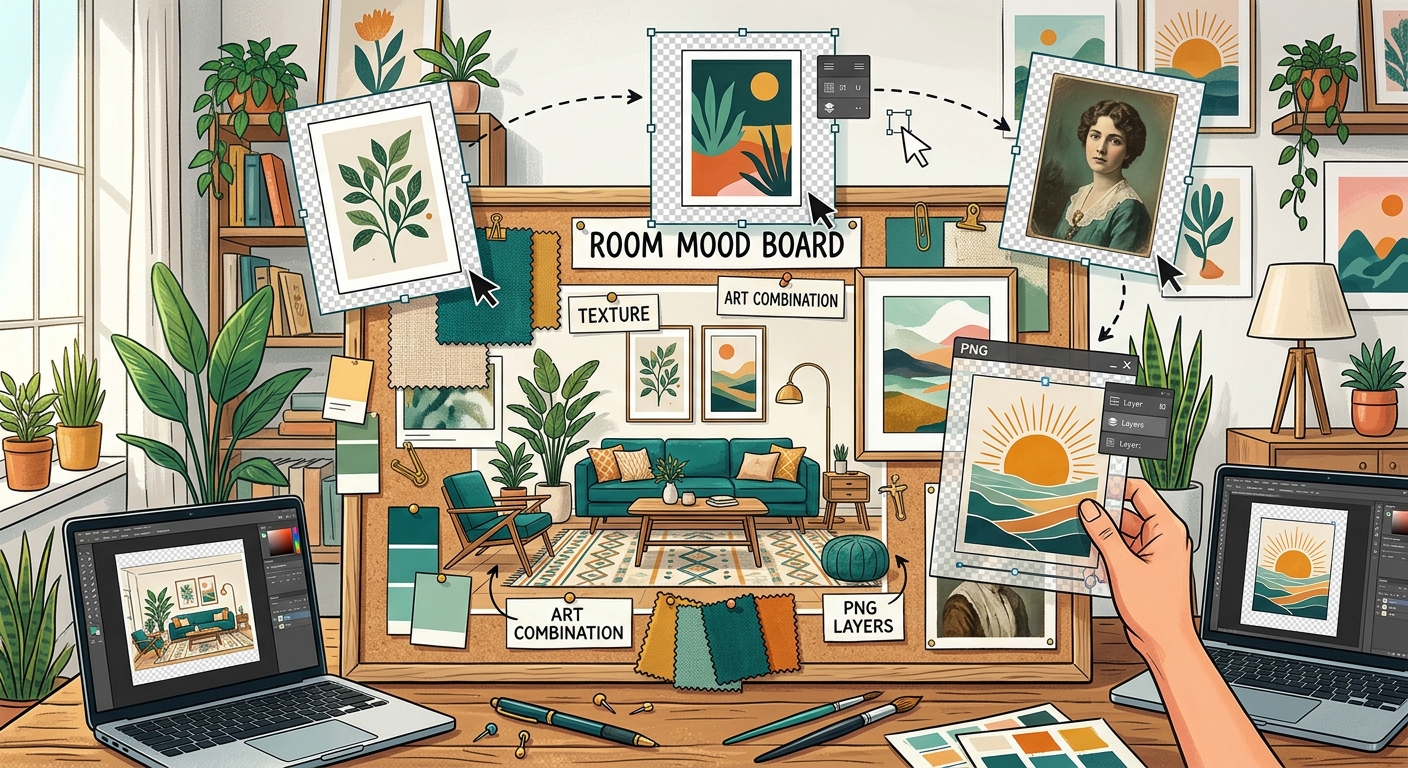
How to Combine Transparent PNGs and Wall Art in Room Mood Boards
Build a room mood board in Canva with transparent PNG furniture, plants, and decor. Learn layering, realistic scale, and coordinating wall art.

Search


Creative work runs on flow. You are deep in a composition, adjusting layers, pulling the right PNG asset from your reference library, and everything is clicking. Then your inbox interrupts. A client wants revisions explained. An art director needs confirmation on a file format. A new contact wants your rate and a turnaround estimate by end of day. Just like that, the flow is gone, and you have become a customer service representative inside your own studio.
What You Need to Know:
1. Electronic mail now carries hundreds of billions of messages per day globally, and creative freelancers absorb a disproportionate share of that volume as client-facing communication.
2. For designers and illustrators, replying to client email demands a full mode shift from visual thinking to verbal justification, and that shift carries a cognitive cost that never appears on an invoice.
3. A free reply generator can handle the language work so you can stay focused on the visual work that actually pays.
Most designers and illustrators measure lost time in terms of missed billable hours. But a meaningful slice of every workweek quietly disappears into email correspondence, and almost nobody in the creative community talks about it.
A copywriter who switches to email is still working with words. A developer who jumps into a client thread is still problem-solving in a structured, logical way. For a designer or illustrator, switching to email is a total cognitive mode change. You move from visual intuition to verbal articulation, from showing to explaining, from making to justifying.
That transition costs more than most people account for. Email adoption data shows that this communication format has been the dominant form of digital professional correspondence since the early 1990s, and its volume has compounded every year since. For a solo designer juggling three or four client projects at once, that volume materializes as a constant drip of threads demanding responses, follow-ups, and clarifications. None of them feel urgent on their own. All of them add up by Friday.
The particular friction for designers who work with PNG assets and client-supplied graphics is the asset request cycle. A client sends over a batch of images. You flag quality issues, size constraints, or format mismatches. The client responds with questions. You answer those questions. They come back with more. By the time the asset situation is resolved, you might have written five or six emails that had nothing to do with actually designing anything.
Here is the piece that most productivity advice misses: it is not just about the minutes you spend composing replies. It is about what those minutes take from your actual output.
Flow state research) describes this as the condition in which creative work feels effortless and ideas surface naturally. It is also fragile. Interruptions do not simply consume the time of the interruption itself. They reset your mental context entirely. Recovering that context, re-entering the visual problem you were solving before the inbox pulled you away, takes additional time and energy that will never appear on an invoice.
For a designer working with transparent PNGs on a brand identity project, or building detailed illustration for editorial work, this is not a minor inconvenience. It is a structural problem in how the workday is organized. An administrative task is eating into the resource that generates the most value: focused creative attention.
If you track the types of email you write in a given week, a pattern emerges quickly. The requests fall into predictable categories:
None of these emails are hard to write in isolation. Writing six different versions of them across four active clients, while also doing the actual design work, is genuinely exhausting. Each one requires a different tone, a different level of technical detail, and a judgment call about how firm or flexible to sound. That is invisible labor, and it compounds over the course of a month.
A freelance designer with a moderate client load might write fifteen to twenty of these emails per week. At five to ten minutes per email, that adds up to one and a half to three hours of correspondence every week. Over a month, that is a full working day gone. Over a year, it amounts to nearly two full working weeks.
That is time that could go toward actual client work, portfolio development, personal projects, or simply finishing the day at a reasonable hour. And yet most designers never name this as a problem, because each individual email seems too small to complain about.
The hidden issue is not just time. It is also consistency. When you are tired at the end of a long design session, the email you write to a client does not represent your best professional voice. You rush. You leave out context. You forget to address one of the three questions they asked. The client follows up again, and you have created more work for yourself.
Good client communication builds trust and reduces revision cycles. Inconsistent email habits, even subtle ones, erode both over time. For a freelancer whose reputation depends entirely on how clients experience working with them, that matters more than most studio owners want to admit.
The practical fix is not about becoming a better email writer. That framing misses the point entirely. The fix is about removing the writing burden from the equation so that your mental energy stays where it generates value.
A free reply generator lets you paste in an incoming client email, choose the tone you want, and get a well-structured draft back in seconds. You read it, adjust if needed, and send. The cognitive load of starting from a blank reply disappears. Time per email drops from several minutes to under one minute. And the output is consistent and complete, because you are editing a draft rather than generating one from scratch while mentally depleted from a day of visual problem-solving.
This kind of tool does not replace your judgment. You still decide what to say, and you still adjust the tone to fit the specific client relationship. What it removes is the friction of getting started, which is where most of the time actually goes.
| Task | Writing from Scratch | Using a Reply Tool |
|---|---|---|
| Time per email | 5 to 10 minutes | Under 1 minute |
| Mental effort required | High, demands a full mode shift | Low, you review and refine a draft |
| Consistency across clients | Varies with energy and mood | Consistently professional by default |
| Risk of missing a client question | Moderate | Low, the draft structures complete responses |
| Impact on creative flow | Significant interruption | Minimal interruption |
The comparison above reflects real patterns, not projections. When you apply the right tool to a repetitive administrative task, the gains are immediate and they hold up over time.
The email problem most creative freelancers never think to fix is not the volume of messages in the inbox. It is the mental cost they accept every time they shift from design work to client correspondence. That cost compounds quietly, across weeks and months, in the form of slower output, creative fatigue, and client relationships that feel slightly strained without any obvious cause.
Solving it is not about hacking your inbox or training yourself to write faster under pressure. It is about recognizing that your focused creative attention is the most valuable resource in your business, and treating anything that drains it as a problem worth addressing. The tools exist. Most of them are free. The question is whether you will start using them before another productive Friday disappears into an inbox that could have been handled in half the time.
Build a room mood board in Canva with transparent PNG furniture, plants, and decor. Learn layering, realistic scale, and coordinating wall art.
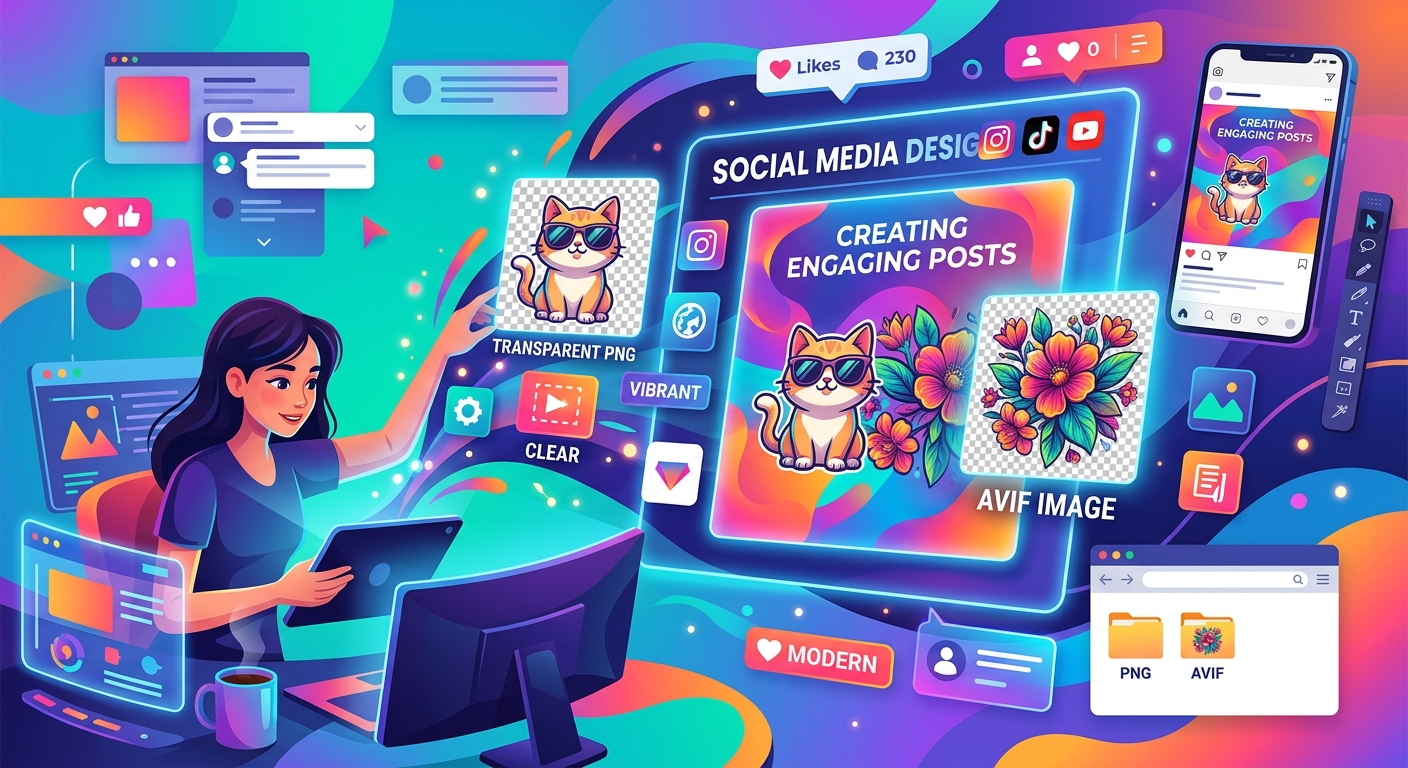
Combine transparent PNG cutouts with AVIF photos in Canva or GIMP. Build clear thumbnails and social posts, handle import issues, and export clean designs.
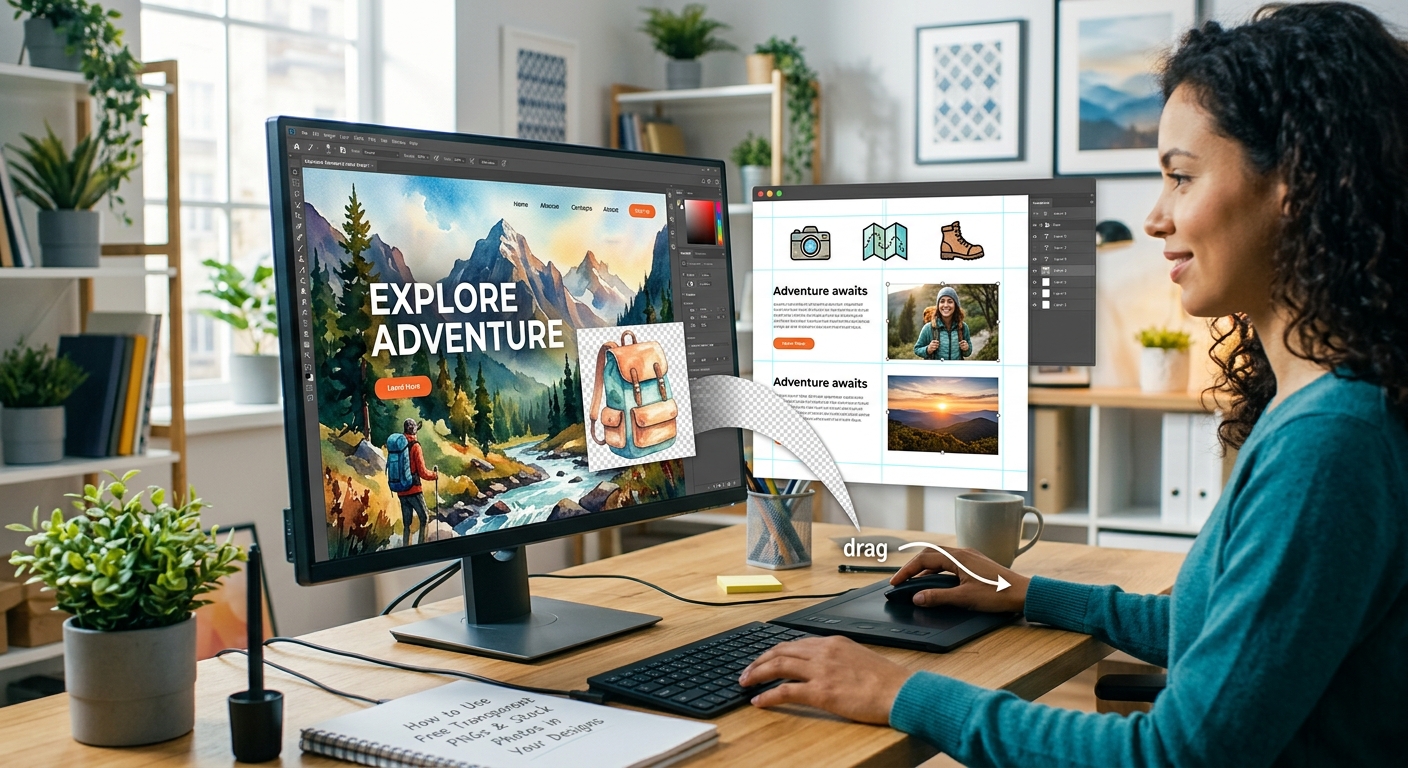
Layer free transparent PNGs over stock photos in Canva or GIMP to build polished thumbnails, social graphics, and blog headers step by step.